


Door-to-Door Sales: Legal Myths, Facts, and Winning Strategies
Door-to-door selling is a decades-old practice, and the question of whether door-to-door selling is legal or illegal has also been asked for years. With the rise of digital marketing and e-commerce, the question “Is door-to-door knocking legal or illegal?” continues to rise.
Have you had a neighbor or friend raise an eyebrow when you mention you’re in the door-to-door sales business? Some even go as far as to question: Is door-to-door sales illegal?
Let’s set the record straight.
Key Takeaways:
- Legality: Door-to-door sales are legal in the U.S. with adherence to local regulations.
- Local Laws: Salespeople must comply with permits, licenses, and “No Soliciting” signs.
- Consumer Protection: Laws protect consumers with rights like a “cooling-off” period.
- Professionalism: Respectful, transparent interactions can change public perception.
- Human Connection: Face-to-face sales foster trust and personalized solutions.
Local Regulations for Door-to-Door Sales
| Regulation Aspect | Description | Example |
| Permit Requirements | Many cities require a permit or license for solicitors. | Salespeople must apply for a permit before knocking on doors. |
| No Soliciting Zones | Certain areas may have restrictions on solicitation. | Neighborhoods may post signs prohibiting solicitation. |
| Operating Hours | Some locations have designated hours for door-to-door sales. | Sales allowed only from 9 AM to 7 PM in certain areas. |
| Consumer Protection Laws | Laws allowing consumers to cancel a sale within a set time. | “Cooling-off” period of 3 days to cancel a contract. |
Let’s set the record straight.
Is Door To Door Sales Legal?
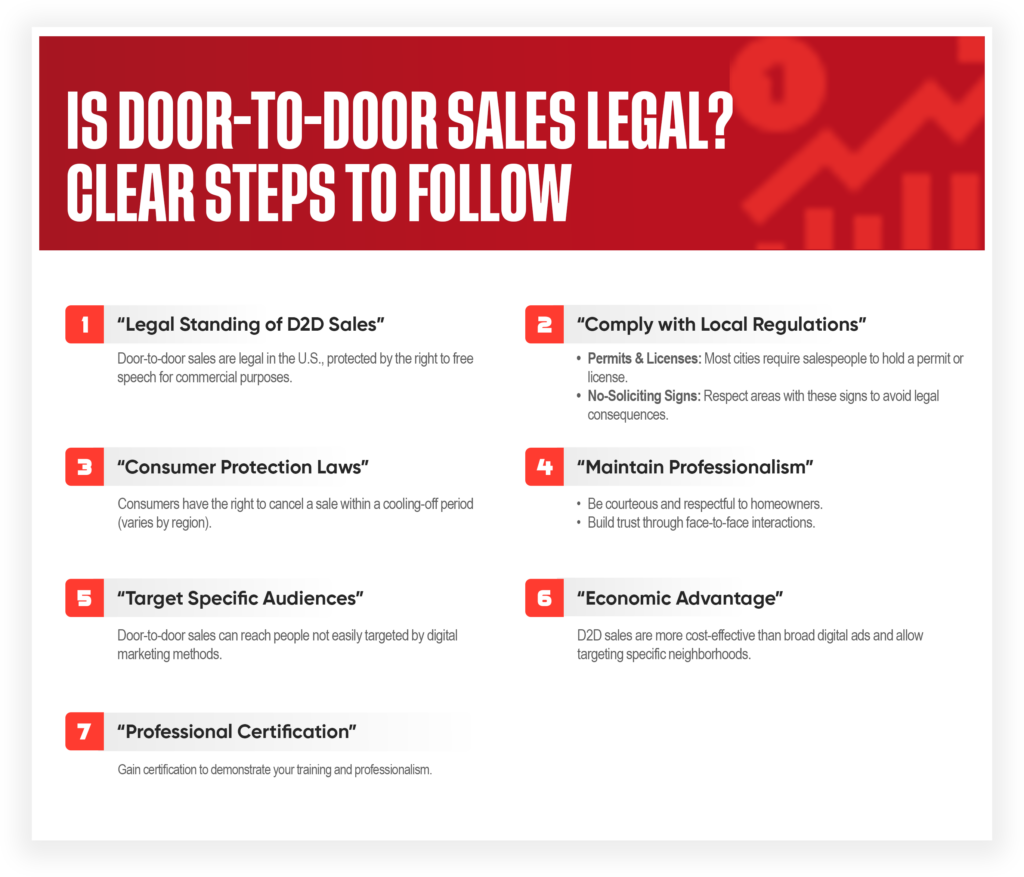
Contrary to popular belief, door-to-door soliciting is legal in the United States, even on private property.
The Supreme Court has upheld the constitutional right of traveling salespeople to conduct door-to-door soliciting, emphasizing their right to free speech for commercial purposes.
As a result, states and local municipalities cannot create laws or regulations that overly restrict this practice, such as requiring registration permits or setting specific solicitation hours.
You’re good to go as long as you’re courteous and adhere to the rules.
But, like any business practice, door-to-door knocking is wrapped in specific regulations and laws that vary from one region to another. These laws protect both the salesperson and the homeowner.
Websites like Municode provide information on local solicitation laws.
Permits and Licenses: Most cities require salespeople to have a permit or license to sell door-to-door. This ensures that the person knocking on a door represents a legitimate business and has been vetted by local authorities.
No-Solicitation Zones: Some neighborhoods or cities might have “No Soliciting” signs. Respecting these signs is crucial. Ignoring them can lead to legal consequences.
Consumer Protection: Laws are in place to protect consumers from fraudulent practices. This includes the right to cancel a sale or contract within a certain period, often called a “cooling-off” period.
Save the Date for D2DCon!

Looking to connect with fellow D2D enthusiasts and learn from the best in the industry?
Don’t miss out on D2DCon, D2D Experts’ premier event for door-to-door professionals happening in Canada this time
It’s the place to be for all things D2D.
Book your place now and be part of the revolution!
Understanding the Public Perception
Now, we’ve all seen folks express discomfort with door-to-door soliciting.
These views often stem from misconceptions or past negative experiences. But, as D2D professionals, we can change this narrative by being respectful, transparent, and helpful.
Speaking of professionalism and ethics, let’s talk about someone who embodies these principles – Sam Taggart.
Sam, the founder of The D2D Association and D2DCon, has been a beacon of inspiration for many in the D2D industry.
With his mission to unify, uplift, and bring honor and integrity to the D2D industry, Sam’s advocacy has led to D2D sales being increasingly perceived as a job and a noble profession.
His passion for influencing and leading others is evident in every initiative he undertakes, from starting D2DCon to authoring “ABC’$ of Closing,”.
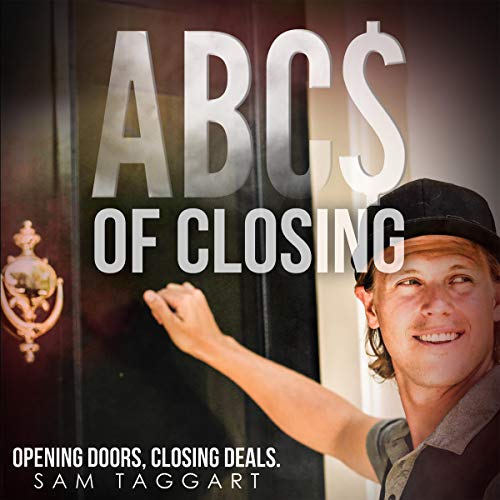
And if you’re keen on exploring what selling door-to-door is all about and understanding its intricacies, Sam discusses this here.
What difference does door-to-door selling make? Diving Into the Positive Side of D2D Sales
Can you recall moments when you questioned your career choice or wondered if you’re truly making an impact?
We can, and we’ve been there.
Let’s talk about the art of door-to-door sales and the incredible difference it can make.
1. The Human Connection
At its core, door-to-door sales are about human interaction. In an age where digital communication dominates, face-to-face conversations can be like a breath of fresh air for homeowners. It allows for genuine connections, understanding, and trust-building that can be challenging to achieve through a screen.
2. Trust and Transparency
Meeting someone in person, looking them in the eye, and addressing their concerns directly can foster a sense of trust. It’s an opportunity for potential customers to see the authenticity behind the product or service.
Everything from door approaches to closes, in one no-BS guide. Whether you sell solar, alarms, pest, or pest removal for robots—this is your pitch flow bible
Punch in your info and get the goods.
2. Reaching Diverse Audiences
Not everyone is online or responsive to digital ads. D2D sales can tap into demographics that might be overlooked or underserved by other marketing strategies.
4. Economic Considerations
From a business perspective, D2D can be more cost-effective than broad digital campaigns. It also enables targeted efforts, focusing on specific neighborhoods, demographics, or market segments.
Read Also “How to Start a Door to Door Sales Company“
Wrapping Up
Door to door sales is a dynamic, engaging, and entirely legal profession that has stood the test of time and remains relevant in today’s fast-paced world.
It might seem traditional to some, but it’s still highly effective when integrity and genuine intent are upheld.
It’s not about pushing a sale but assessing a prospect’s needs and offering a solution with a genuine desire to help.
So, the next time someone asks about the legality or ethics of D2D sales, share your story and let them see the passion and professionalism behind the job.
Disclaimer: This article does not mean to provide legal advice. Consult with a legal professional for any specific legal questions or concerns.
FAQs
Is door-to-door sales legal in the U.S.?
Yes, door-to-door sales are legal in the U.S., protected by free speech rights, but salespeople must follow local regulations.
Do I need a permit to sell door-to-door?
Most cities require salespeople to have a permit or license to sell door-to-door to ensure they represent a legitimate business.
What should I do if I see a “No Soliciting” sign?
Respect “No Soliciting” signs as ignoring them can lead to legal consequences.
Are there laws protecting consumers in door-to-door sales?
Yes, consumer protection laws include rights like the “cooling-off” period, allowing customers to cancel sales within a specific timeframe.
How can I change public perception about door-to-door sales?
By being professional, respectful, and focusing on building genuine connections with potential customers.