

You know that feeling. You open your phone, and BAM! Another ten ads hit you before you can even check the weather. It’s ad fatigue, and it’s hitting consumers harder than a dropped CRM tablet. Your potential customer is drowning in digital noise, making it almost impossible to break through with an online message.
So, does door to door sales still work? The simple answer is an undeniable yes. It’s not just surviving; it’s thriving in specific high-value industries. The future of door-to-door sales in America isn’t about being old school. It’s about being the antithesis of the digital overload.
People are tired of seeing the same repetitive ads that follow them everywhere. They’re tired of being tracked by retargeting campaigns. They want real human interaction.
As the great sales thinker Dale Carnegie once said, “You can close more business in two months by becoming interested in other people than you can in 2 years by trying to get people interested in you”. That is the power of face-to-face sales.
This article gives you the definitive answer. We’re breaking down the data, the psychology, and the tech that proves direct selling is still effective today.
Key Takeaways
- Door-to-door sales still works by cutting through digital clutter.
- The primary driver of the direct selling market is the need to check and validate a product before purchasing it.
- Sectors like solar, home security, and pest control have the highest success rates.
- Compliance with the FTC’s Cooling-Off Rule and local laws is more important than ever.
Why People Still Ask if Door to Door Sales Still Work
It’s fair to ask the question.
We live in a world dominated by social media algorithms and AI-driven lead generation. Everyone is talking about funnels and clicks. This rise of digital marketing makes many people see the door-to-door model as outdated.
But this perception is the biggest opportunity for reps today.
The Perception of Door-to-Door Sales as Outdated
The image most people have is an image from the 1950s. They picture a guy in a suit selling encyclopedias. They think about high-pressure tactics. That’s why many people assume knocking on doors still works for sales only in very niche, desperate markets.
The history of door-to-door sales decline is tied to those old-school methods. That, and a few outdated solicitation laws in some US jurisdictions.
Rise of Digital Marketing and AI-Driven Lead Generation
Online sales effectiveness is undeniable. AI tools can target millions of people with precision. So, why bother going door-to-door? Why not just run a cold calling campaign?
The problem is one of scarcity. Attention is the new gold.
Consumer Fatigue from Online Ads and Renewed Trust in People
Consumers are exhausted. They see an estimated 5,000 ads daily. This causes annoyance and negative brand perception.
A staggering 91% of respondents feel that ads are more intrusive today compared to the past. Furthermore, 6 out of 10 US adults are less likely to buy from a brand that bombards them with repetitive ads.
This is where personal selling shines. Face-to-face marketing rebuilds consumer trust. When you show up, you are a human, not a banner ad. You’re building a relationship, not just trying to grab a click.
The Numbers That Demand Attention
The direct-to-consumer sales model is a major force.

Market Revenue in Direct Selling
The direct selling market in the United States is huge. It’s expected to reach a projected revenue of US$ 62,566.5 million by 2030. This market is also expected to grow at a Compound Annual Growth Rate (CAGR) of 6% from 2025 to 2030.
This growth shows that high-ticket door-to-door products and services aren’t going anywhere. Why is it growing? Because customers want to check and validate a product before purchasing it.
Industries Where Door-to-Door Sales Still Thrive
The market is shifting away from low-value commodities. Today, door-to-door thrives in high-investment, high-trust sectors.
- Solar Panel Sales: Solar door-to-door sales success rates are massive because they require a complex, in-home consultation. Homeowners need a rep to explain the tax credits and the installation process.
- Roofing and HVAC: After a major storm, roofing canvassing is essential. It’s a high-value emergency service where immediate, localized trust matters.
- Pest Control and Home Security: These subscription sales models rely on hyper-local community presence and trust. People want to meet the person protecting their home or family.
Trust and Consumer Psychology Data
The most effective sales model is the one that minimizes perceived risk. Showing up in person achieves this. When you are standing in front of the prospect, you are building immediate rapport. This personal touch is the antidote to the digital trust crisis.
Everything from door approaches to closes, in one no-BS guide. Whether you sell solar, alarms, pest, or pest removal for robots—this is your pitch flow bible.
Punch in your info and get the goods.
How Door to Door Sales Adapt in the Digital Era
Residential canvassing today looks nothing like it did twenty years ago. Field sales have integrated technology. The old model of salespeople driving around randomly is gone.
CRM and Canvassing Apps
Modern door-to-door sales CRM software in the USA is essential. Reps aren’t just taking notes on clipboards. They’re using canvassing apps to track leads, map out territories, and ensure they aren’t soliciting homes that have “No Soliciting” signs. This efficiency means more time closing and less time driving.
FTC and Local Solicitation Laws
The modern rep understands that compliance is the price of entry.
The FTC’s Cooling-Off Rule is the main federal protection. This rule requires that for sales of $25 or more made at the consumer’s home, the buyer has the right to cancel the contract within three business days. The seller must provide both written and oral notice of this right, along with two cancellation forms.
The FTC consumer protection laws are often expanded by states. For example, some states have extended the cooling-off period for certain high-value sales, like solar panels. Professional teams always check local sales ordinances.
Personalization as a Differentiator
AI personalized approach gives you a massive sales psychology advantage. Digital ads try to personalize their message based on tracking data. You personalize your pitch based on the actual roof they have, the visible security signs, or the local problems you see. That’s a game-changer.
Traditional vs. Hybrid Door-to-Door Sales
The smartest companies don’t choose one over the other. They blend them.
| Feature | Traditional D2D (Pre-2010) | Hybrid D2D (Modern) |
| Lead Generation | Cold knocking, phone books, simple referrals | AI targeting, social media ads, CRM mapping, GEO-fencing |
| Sales Pitch | High pressure, one-size-fits-all script, focus on features | Low pressure, hyper-personalized value proposition, focus on problem-solving |
| Data Tracking | Paper notes, Excel spreadsheets | Canvassing apps, mobile CRM software |
| Compliance | Minimal, often reactive | Proactive permit checks, FTC rule training, and digital tracking of “No Soliciting” homes |
What Companies Prove Door to Door Sales Still Works
Some of the biggest, most successful companies in the USA rely heavily on this model.
Solar Panel Case Study
The solar door-to-door sales success rates remain high because the direct-to-consumer sales model is perfectly suited for it. Solar is a big, complex decision. Homeowners need an expert in their kitchen to explain ROI, Tax incentives, and installation logistics. You cannot sell a $30,000 system with a banner ad.
Home Security Systems
Companies like Vivint have proven that door-to-door is incredibly effective for home security systems. They are selling a subscription sales model tied to a high-trust product. The best way to sell peace of mind is to look someone in the eye.
Subscription Utilities
Internet services sales and utilities sales face-to-face are still a powerhouse. When a provider runs fiber down a street, they need immediate, high-volume sign-ups. Knocking on the door is the fastest way to get that initial neighborhood momentum.
The Competitive Advantages of Door to Door Sales
The value of door-to-door is that it’s inherently better at certain things than digital marketing.
Live Objection Handling
When a prospect clicks away from an ad, you lose. When a prospect tells you “I’m not interested” at the door, you have a chance for live objection handling. This immediate feedback allows you to pivot your pitch, address their exact pain point, and close the deal right there.
Rapport and Trust-Building
You cannot build genuine rapport through a screen. Personal selling is the fastest way to earn a prospect’s trust. It’s a genuine community presence, which helps build a positive brand image in the area.
Higher Conversions in Specific Industries
For high-ticket door-to-door products, the success rate of door-to-door sales in the USA is superior. The commitment is too large for an impulse online purchase. That is why this model still works.
When Door to Door Sales Do Not Work Anymore
This model is not a silver bullet. You have to be realistic.
Areas with Strict Solicitation Bans
Yes, solicitation laws in the USA can shut down a campaign fast. Some cities have strict “No Soliciting” ordinances that are actively enforced. A great rep always checks the local laws before they step on the porch.
Low-Value, Commodity Products
If you are trying to sell a product that costs less than $50 and has no compelling demonstration, door-to-door is probably not the most efficient channel. Those are products better sold through a cold calling or online channel. The effort-to-reward ratio is too low.
Note: Legal Risks
FTC’s Cooling-Off Rule requires you to inform the consumer of their right to cancel within three business days. Failing to comply with this law can lead to serious legal consequences and is one of the biggest reasons this industry gets a bad rap. Always check the state and local FTC laws for the area you are canvassing.
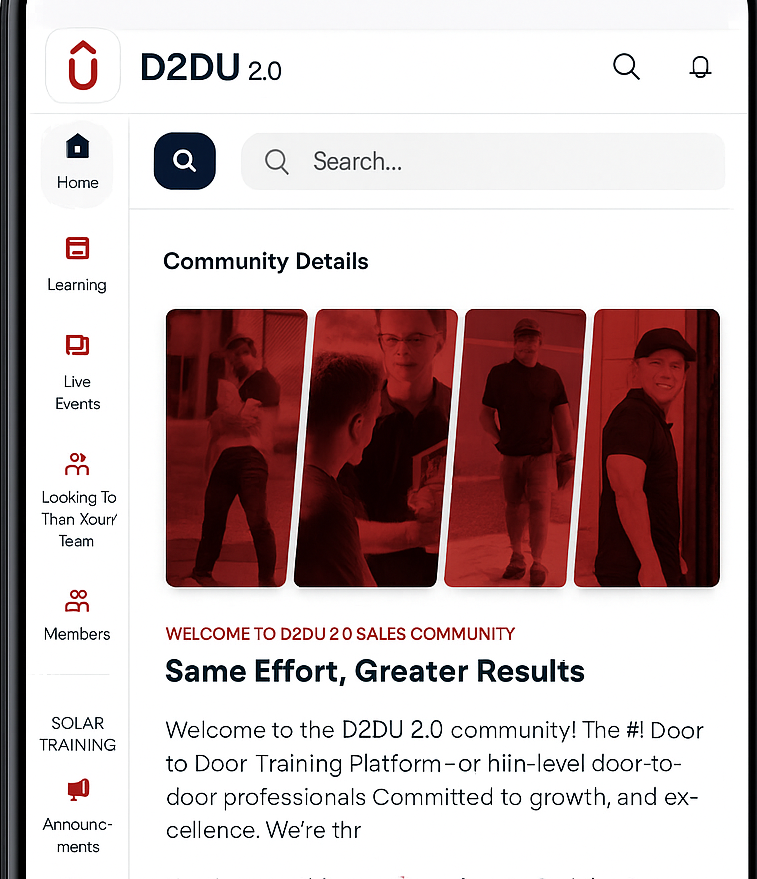
Hire fewer trainers, ship more wins
Build a sales machine that runs without you hovering
Should You Invest in Door to Door Sales Today
The answer to does door to door sales still work is simple: it works if you approach it with a modern, high-tech, and compliant strategy.
Key Questions for Decision-Making
Ask yourself these three key questions before launching a campaign:
- Is the product or service a high-ticket item (over $500) or a long-term subscription?
- Does the sale require an in-person demonstration or a personalized, technical consultation?
- Does the product solve a highly localized problem (e.g., specific pests, a neighborhood crime spike, a unique roofing issue)?
If the answer to these questions is yes, you should absolutely invest in a strong D2D campaign.
Blending Digital and Personal Models
The best model is a hybrid one. Use digital tools to generate warm leads. Then, use D2D to close the sale. D2D experts use GEO-fencing data to know exactly where to knock.
Bonus Point
The face-to-face element creates the best referral incentives. People are far more likely to recommend a salesperson they met and trusted than an ad they saw online.
Expert Insights for Modern Sales Teams
The industry has excellent resources. You don’t have to start from scratch.
Ethical Guidelines & Compliance
Always follow the ethical guidelines set by organizations like the Direct Selling Association DSA. Ethical selling builds reputation. FTC compliance isn’t optional; it’s mandatory.
Recommended Tech Stack
Successful modern teams don’t leave things to chance. You need:
- A dedicated door-to-door CRM
- Lead mapping software
- Compliance checklists
Disclaimer
Always check local permits and city ordinances before beginning a door-to-door campaign. A single fine for soliciting without a permit can destroy your campaign budget and team morale.
FAQs
Does door to door sales still work for high-value products?
Absolutely. It is the preferred method for high-value products like solar panels and new roofs because the personal presence is required to establish trust and fully explain the complex financial details.
What industries rely most on door to door sales today?
The primary industries are home services that solve specific local problems: solar energy, roofing, home security, pest control, and subscription utilities (like fiber internet).
Are door to door sales legal everywhere?
No. Door-to-door sales are generally legal, but many cities and townships have local ordinances requiring a permit and setting hours of operation. Always check the local laws.
How do door to door sales compare to cold calling?
Door-to-door sales typically have a much higher conversion rate for high-ticket items because they allow for immediate rapport-building and visual demonstrations that cold calling cannot provide.
Conclusion
So, does door to door sales still work? Yes, but only when you stop relying on outdated methods. The old model of door-to-door sales is dead. The new model, which is compliant, tech-driven, and focused on genuine human connection, is thriving.
The future of sales belongs to the rep who can cut through the noise of digital saturation and provide a personal, trustworthy experience. The people who are winning today are the ones who are training on the latest ethical and technological guidelines. It’s time to stop thinking of D2D as a last resort and start seeing it as a competitive edge.
JP Arlie is a seasoned professional with a remarkable 30-year career in the direct sales industry. He has achieved significant milestones, leading organizations responsible for over 300,000 in-home sales transactions and recruiting more than 40,000 sales representatives.
JP’s versatile journey in the direct sales field has seen him take on various roles, from business owner to Vice President in a publicly traded company. One of JP’s core values is his commitment to positively impact the lives of others and change the course of history. Additionally, JP serves as an esteemed Executive Education Coach at Harvard Business School’s Program for Leadership Development.
JP Arlie specializes in vital areas, including recruiting and retention strategies through effective systems and processes. His insights have proven instrumental in helping businesses of all sizes build and maintain high-performing sales teams. Furthermore, he excels in guiding organizations through the process of meaningful organizational change.